Project-specific plan
Identify applicable requirements, responsible roles, communication channels, emergency information and the processes used to review the work.
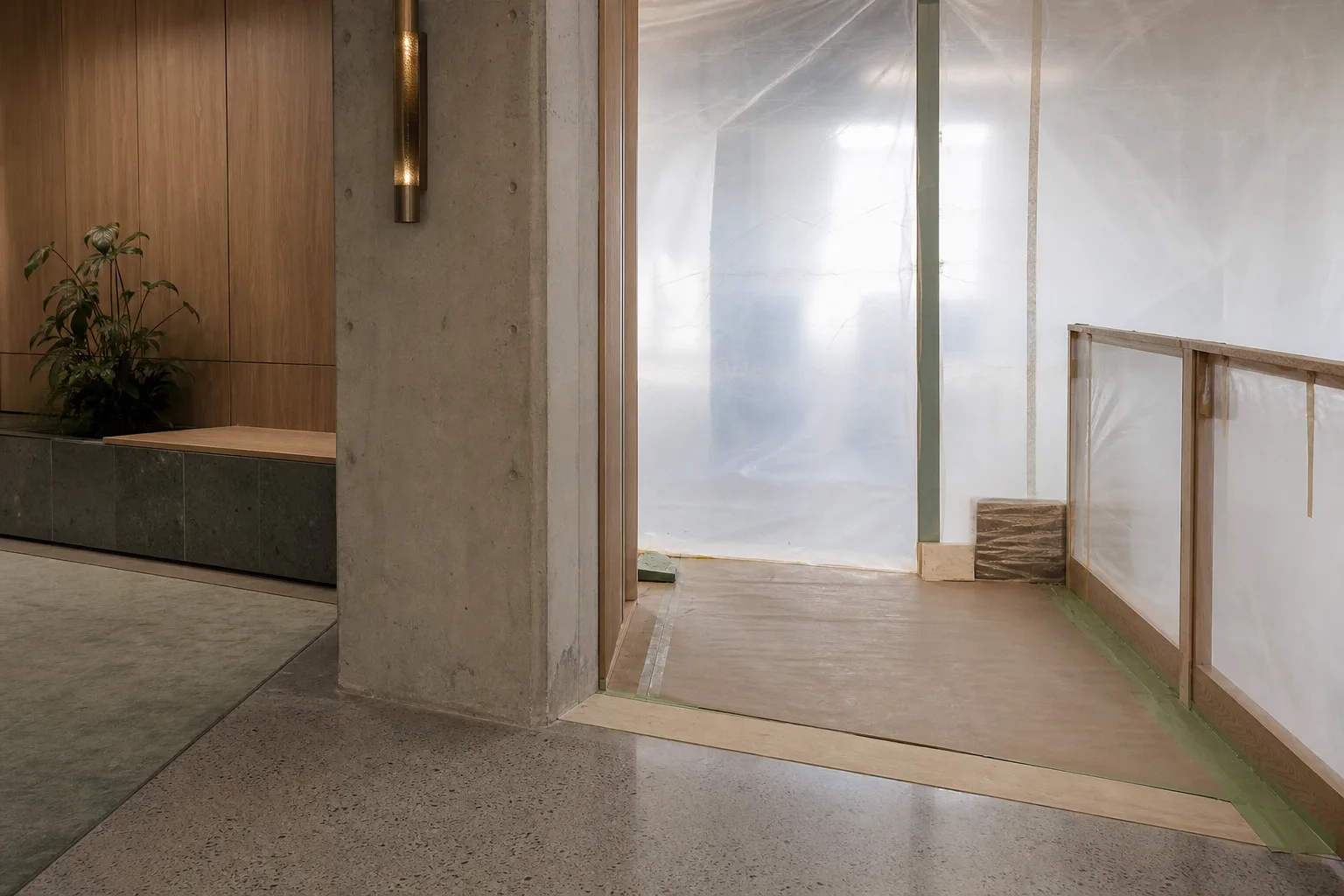
Site-specific planning + controlled access
Every project has a different combination of workers, occupants, visitors, deliveries, temporary conditions and changing tasks.
Site coordination connects people, boundaries, changing conditions and clear reporting channels.
Identify applicable requirements, responsible roles, communication channels, emergency information and the processes used to review the work.
Establish who may enter, required orientation, check-in, permitted routes, visitor controls and restricted areas.
The responsible field team reviews the planned task, crew, equipment, interfaces, changing conditions and required controls before work begins.
Competent or qualified persons are assigned where the task, regulation or project plan requires them.
Conditions, near misses, incidents and concerns follow the reporting and response process established for the project.
Plans are revised when scope, sequence, access, weather, staffing or site conditions materially change.

Occupied sites
Renovations may occur beside residents, employees, customers or other tenants. The project team needs an agreed plan for separation, access, noise, dust, deliveries, shutdowns and changing conditions.
Access and communication change with the audience; the headings keep that distinction explicit.
Site orientation, task planning, required controls, reporting and emergency procedures established for their work.
Access changes, shutdowns, occupant interfaces, milestone activities and escalation contacts relevant to operations.
Authorization, check-in, escort, route and site requirements appropriate to the visit.
Boundaries, temporary access, utility interruptions and changes affecting normal use of the property.
Responsibility boundary
This page explains communication and responsibility at a high level. Project orientation, site authorization and task controls are established for the actual work by the responsible personnel.
Responsibilities and access are defined by the project and current conditions.
Responsibilities are established by applicable requirements, contracts, employer duties, project roles and the site-specific plan.
Access depends on the site plan and current conditions. Visitors use the authorization, orientation, escort and route requirements established for the project.
Responsible project personnel evaluate the change, revise the work or access plan where required and communicate updated conditions.